Best overall: give your keys one fixed home. Best for commuters: use a deliberate house-to-car handoff. Best simple option: reserve one pocket for keys. These habits to prevent losing your house keys belong in your everyday routine in 2026, not just on a reminder you stop noticing.
- The best habits to prevent losing your house keys start with one storage spot and a check before closing doors.
- Use a dedicated pocket or bag compartment when you leave home; avoid temporary surfaces.
- Keep keys with you during house-to-car transitions, especially while loading bags.
- Cupples Locksmith Service provides 24/7 home and vehicle lockout assistance in West Tennessee, not key cutting or replacement.
Why this matters
Losing keys and locking keys inside are different problems. A storage routine helps you remember where you put them; a departure check helps you avoid leaving them behind a locked door. You need both.
If you are already locked out, prevention can wait. Cupples Locksmith Service provides home and vehicle lockout assistance for residents and drivers in Jackson and West Tennessee. Call 731-225-9629, explain where you are, and say whether your keys are inside or missing.
Cupples Locksmith Service is for West Tennessee residents and drivers who need home or vehicle lockout assistance, not replacement keys.
What makes the best key-saving habit?
For your 2026 routine, choose habits you can repeat while carrying groceries, getting children ready, or leaving for work:
- One clear location: You should know where keys belong without searching several rooms.
- A repeatable trigger: Arriving home or preparing to close a door gives the habit a specific moment.
- Physical confirmation: Feeling the actual keys is clearer than assuming you packed them.
- Portability: The routine should still work when you change coats, bags, or vehicles.
- A clear limit: A storage habit cannot replace a missing key or solve an immediate safety emergency.
Start with a routine that matches where you lose track of your keys. Adding every habit at once creates more rules to remember.
Best key habits at a glance
| Rank and habit | Best for | Standout feature | Key limitation |
|---|---|---|---|
| 1. One fixed storage spot | Everyday arrivals home | Gives keys a consistent destination | Fails when you use temporary surfaces |
| 2. A check before closing doors | Preventing keys being locked inside | Confirms keys are with you before separation | Requires a pause during rushed departures |
| 3. One dedicated carrying pocket | Keeping keys findable away from home | Separates keys from loose belongings | Needs attention when clothing or bags change |
| 4. A house-to-car handoff | Commuters and people running errands | Keeps keys accounted for during transitions | Does not help if you leave them on a seat |
| 5. A deliberate key handoff | Households sharing an existing key | Makes responsibility clear | Depends on everyone following the agreement |
| 6. A change-of-routine reset | Travel, coat changes, and unusual days | Checks the places where your usual routine breaks | Helps only when you notice the change |
1. One fixed storage spot: best for everyday arrivals
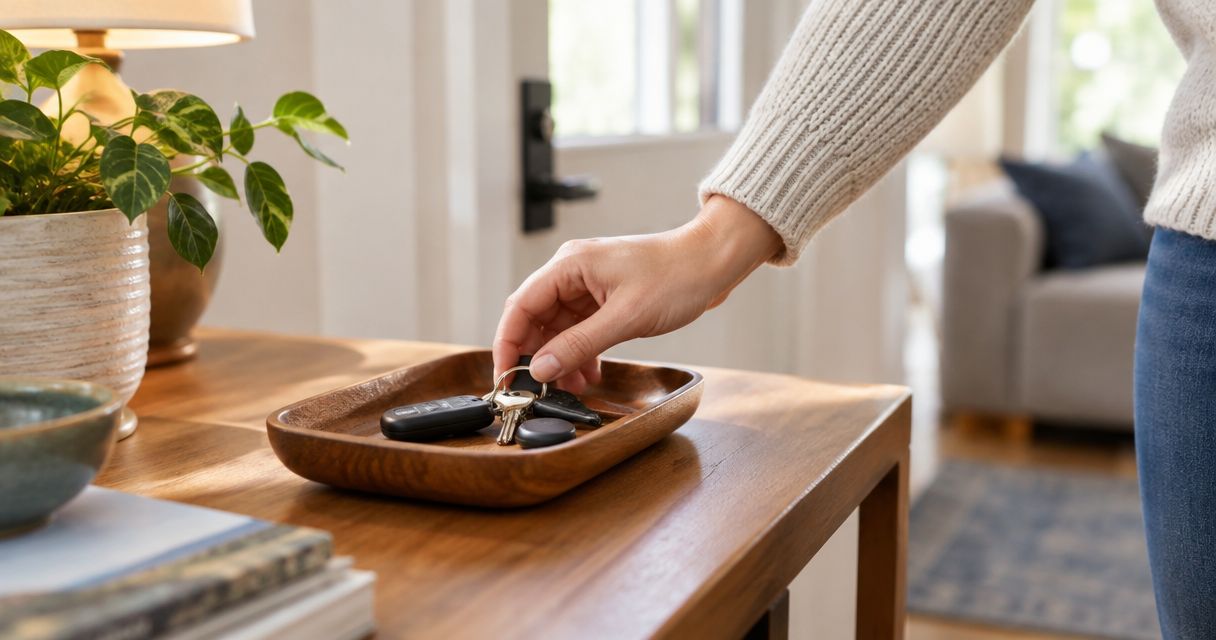
Choose an indoor place where your keys belong whenever you are home. Use an existing drawer, container, or other suitable spot, keeping security in mind rather than putting keys on display by an entrance.
Put the keys there before starting another task. If you carry them farther into the house, return them deliberately instead of leaving them beside groceries, laundry, or mail.
Best for: People who regularly search different rooms before leaving.
Fixed storage spot pros:
- Gives you a clear place to check first.
- Fits an action you already take: arriving home.
- Keeps keys separate from moving piles of belongings.
Fixed storage spot cons:
- A temporary landing place breaks the routine.
- Other household members need to respect the chosen spot.
Verdict: Adopt this first if keys disappear after you get home. A designated place is useful only when you actually return the keys to it.
2. A check before closing doors: best for preventing lockouts
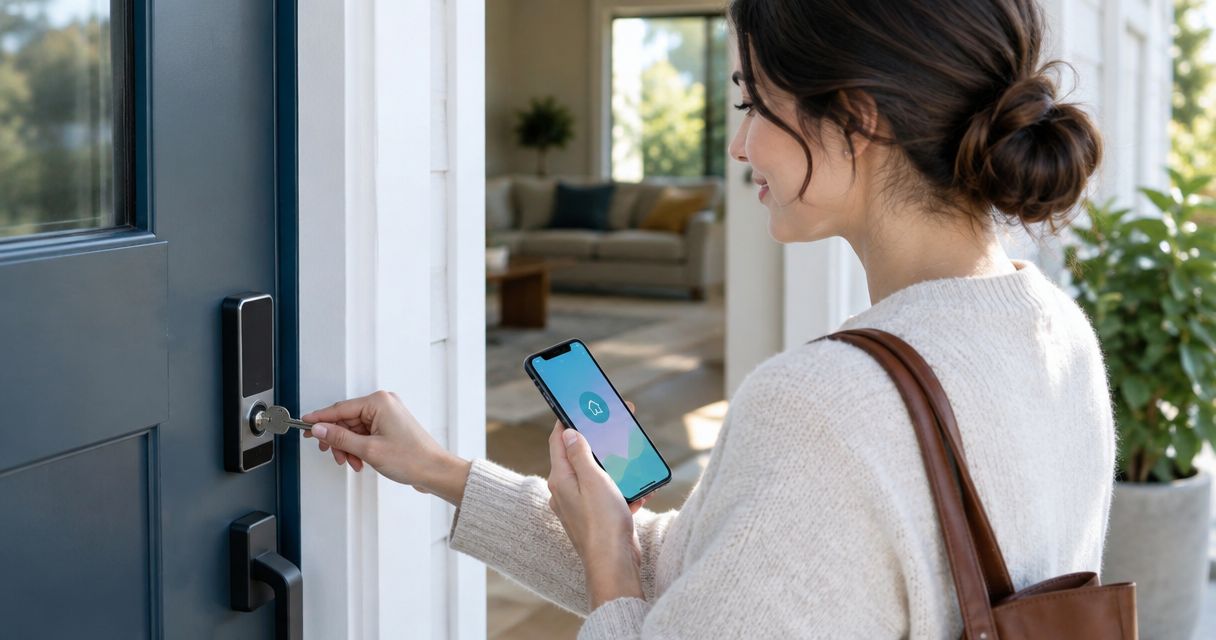
Before closing an exterior door behind you, physically confirm that your house keys are with you. Make the check while you still have access, not after the door shuts.
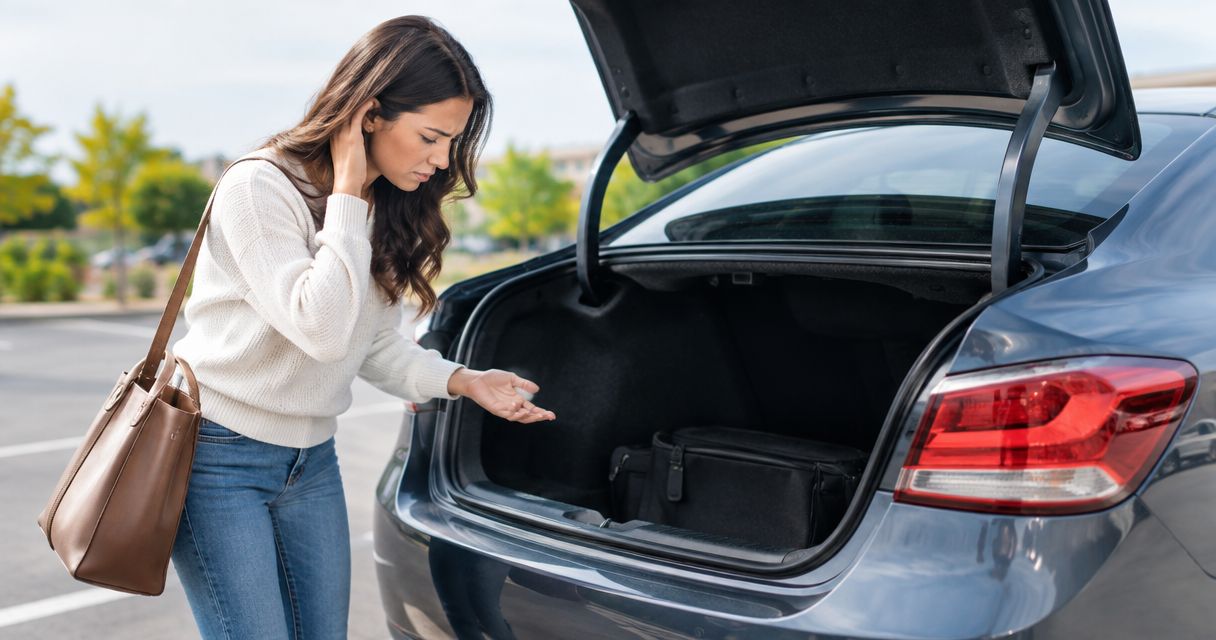
Use the same principle at your vehicle. Confirm that the vehicle key or fob is on your person before closing a door or trunk, and follow the vehicle manufacturer's instructions rather than assuming an electronic feature will prevent a lockout.
Best for: People who know where their keys are but sometimes leave them inside.
Door-check pros:
- Targets the moment access changes.
- Works at both home and vehicle doors.
- Does not depend on remembering where you last saw the keys.
Door-check cons:
- A rushed departure makes the pause easy to skip.
- Checking a bag by sight alone can miss keys buried underneath belongings.
Verdict: Adopt this alongside your storage habit. Knowing the keys are on the kitchen counter does not help once you are outside a locked home.
3. One dedicated carrying pocket: best for keys away from home
Choose a secure pocket or a designated bag compartment for your keys. Keep that location consistent instead of switching between a coat, shopping bag, cup holder, and trouser pocket throughout the day.
When you change bags or clothing, move the keys deliberately. Confirm the new location before leaving the old bag or coat behind.
Best for: People who lose track of keys during errands or outings.
Dedicated pocket pros:
- Gives your keys a predictable place outside the house.
- Separates them from receipts and loose items.
- Makes a physical departure check easier.
Dedicated pocket cons:
- A borrowed coat or different bag interrupts the routine.
- A pocket is not useful if keys fall out or you leave the garment behind.
Verdict: Adopt a carrying location that fits what you actually wear. A routine tied to a bag you rarely carry will not serve you on ordinary days.
4. A house-to-car handoff: best for commuters
Treat moving between your home and vehicle as a handoff, not a gap in the routine. After locking your house, return the house keys to their carrying location. Keep track of the vehicle key or fob while loading belongings.
Avoid putting keys down on a seat, in the trunk, or on an outside surface while you rearrange bags. When you arrive home, finish by returning your house keys to their indoor storage spot.
Best for: Drivers who juggle keys, groceries, work bags, or school belongings.
House-to-car handoff pros:
- Connects home-key habits with vehicle-key habits.
- Gives loading and unloading a clear stopping point.
- Reduces reliance on remembering temporary surfaces.
House-to-car handoff cons:
- Interruptions still require you to check again.
- Different drivers or vehicles can change where keys are carried.
Verdict: Adopt this if your keys go missing between the front door and the driver's seat. Finish putting keys away before starting the next task.
5. A deliberate key handoff: best for shared households
When you lend an existing key to someone authorized to use it, agree on who has it and where it will be returned. Confirm the return instead of assuming the key is back because the person is home.
Keep the agreement simple. A private message can record a handoff, but avoid publicly sharing information about keys or access to your home.
Best for: Households where an existing key moves between family members or other authorized people.
Key-handoff pros:
- Makes responsibility clear.
- Gives the recipient a specific return location.
- Separates a borrowed key from a genuinely missing one.
Key-handoff cons:
- Everyone involved must follow the agreement.
- A message does not confirm that the key was physically returned.
Verdict: Adopt this whenever keys change hands. Check the actual return location before relying on that key for your next departure.
6. A change-of-routine reset: best for unusual days
Before leaving with a different bag, wearing a different coat, or using another vehicle, stop and locate the keys you need. Changes in routine deserve a fresh check even when your normal habits work well.
After travel or a busy weekend, return keys to their usual carrying and storage locations. Do not let the temporary arrangement become an uncertain new default.
Best for: People whose missing-key episodes follow schedule, clothing, or travel changes.
Routine-reset pros:
- Focuses attention on departures that differ from normal.
- Helps you catch keys left in an unused bag or coat.
- Restores the everyday routine after an interruption.
Routine-reset cons:
- Requires you to recognize that something changed.
- Does not replace checking before a door closes.
Verdict: Adopt this as your exception rule. When the day changes, check the key location rather than trusting yesterday's arrangement.
How these habits are ranked
This 2026 ranking puts everyday storage first, then checks at the moment you leave, followed by habits for specific situations. The criteria are consistency, a clear trigger, physical confirmation, portability, and a realistic limit.
The ranking is a practical decision guide, not a measured claim that one habit prevents a particular percentage of lost keys. Choose the habit that addresses your recurring problem, then add a door check.
Which habit should you choose?
Choose one storage spot plus a check before closing doors. Those routines address different problems: finding keys at home and keeping them with you when access changes.
Use these 2 checkpoints:
- Before leaving: Confirm that the keys are physically with you.
- After returning: Put the keys in their agreed storage spot before moving on.
For drivers, apply the same check before closing vehicle doors or the trunk. Home and vehicle lockouts both deserve attention; one reliable house-key routine should not distract you from where the vehicle key is sitting.
Already locked out? Prepare these details
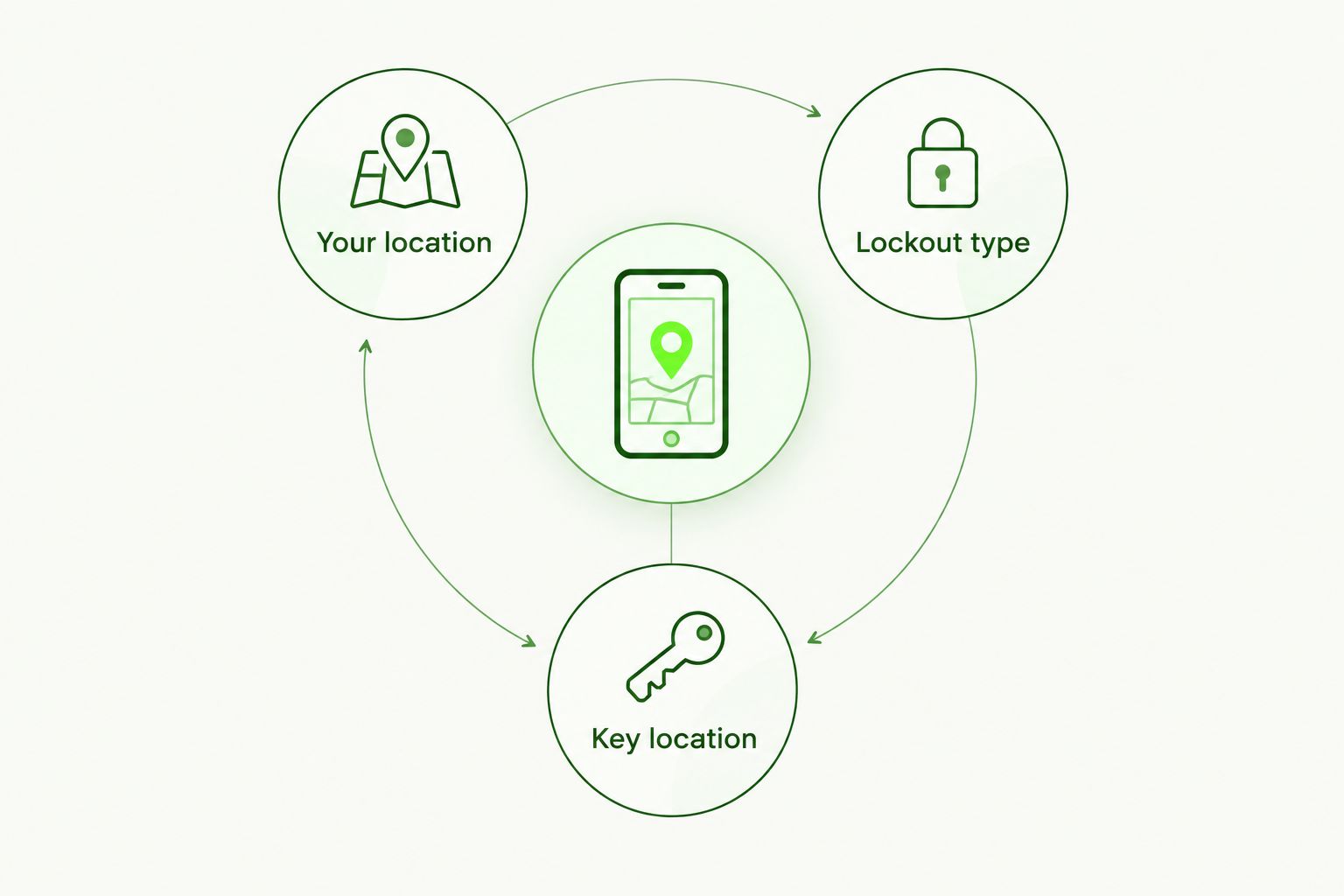
If prevention failed, focus on safety and a clear call. For West Tennessee home or vehicle lockout assistance, call 731-225-9629 and prepare these 3 details:
- Your location: Give the address or a clear description of where you are waiting.
- Lockout type: Say whether you need help with a home or vehicle.
- Key location: Explain whether the keys are inside, missing, or broken.
For a home lockout, explain whether you are the resident or are calling for someone else, and ask what proof of authorized access is needed. For a vehicle lockout, give the make, model, and year if you know them, and explain where the vehicle is parked.
Missing keys and keys locked inside are not the same service request. Cupples Locksmith Service does not cut, duplicate, or replace keys. Explain the situation before arranging help, especially if getting inside will not resolve the missing-key problem.
If someone is in immediate danger, call 911 rather than waiting for routine lockout assistance. Do not attempt entry methods or use tools on a home or vehicle door.
For a calmer next step, read the steps for a calm house lockout experience.
Call for lockout assistance
Explain your location and whether you need home or vehicle lockout assistance in West Tennessee.
FAQ
What's the best habit to prevent losing my house keys?
Give your house keys one fixed indoor storage spot and return them there whenever you arrive home. Pair that habit with physically checking for your keys before closing an exterior door.
Where should I keep my house keys when I go out?
Keep your house keys in a secure, designated pocket or bag compartment. When you change clothing or bags, deliberately transfer the keys and confirm their new location.
How do I stop locking my keys inside my house?
Physically confirm that your house keys are with you before closing the door behind you. Remembering that you saw them earlier is not the same as having them with you.
Can the same habits help prevent a vehicle lockout?
Yes, a dedicated carrying location and a check before closing doors also apply to vehicle keys. Keep track of the key or fob while loading belongings, and follow your vehicle manufacturer's instructions.
What should I do if I am already locked out in West Tennessee?
Call Cupples Locksmith Service at 731-225-9629 for 24/7 home or vehicle lockout assistance. Give your location and explain whether your keys are inside, missing, or broken; call 911 first if someone is in immediate danger.
Can Cupples Locksmith Service make a new key if mine is lost?
No. Cupples Locksmith Service provides home and vehicle lockout assistance but does not cut, duplicate, or replace keys. Explain that your key is missing before arranging assistance.
Should I change my key routine in 2026 if it already works?
Keep a routine that reliably gives your keys a fixed location and includes a check before doors close. Add a deliberate reset when you change bags, coats, vehicles, or your usual schedule.
One last thing
A key can be exactly where you left it and still be useless to you outside a locked door. For 2026, make physical possession—not memory—the final check before you leave.
If you need home or vehicle lockout assistance in West Tennessee, call 731-225-9629. Say where you are and what happened.