The causes of house and apartment lockouts include keys left inside, interrupted exit routines, confused key handoffs, lost keys, outdated keys, and locks that stop working. The best prevention is a key check before you close the door; if you are already locked out, focus on safe access rather than forcing entry.
- The causes of house and apartment lockouts include forgotten keys, lost keys, key mix-ups, and lock problems.
- Check your keys before closing either your home door or your vehicle door.
- Cupples Locksmith Service provides vehicle and home lockout assistance in West Tennessee, not key cutting.
- Renters should contact property management about authorized access; immediate danger calls for emergency services.
Locked out right now?
Cupples Locksmith Service is for West Tennessee residents and drivers who need vehicle or home lockout assistance, not new keys. Call 731-225-9629 and explain whether you are outside a house, apartment, or vehicle. The service provides 24/7 emergency lockout assistance.
You can also find the business at Cupples Locksmith Service. Give your location and describe where your keys are before discussing the next step.
- Home: Tell the person answering whether your keys are inside, missing, or not working.
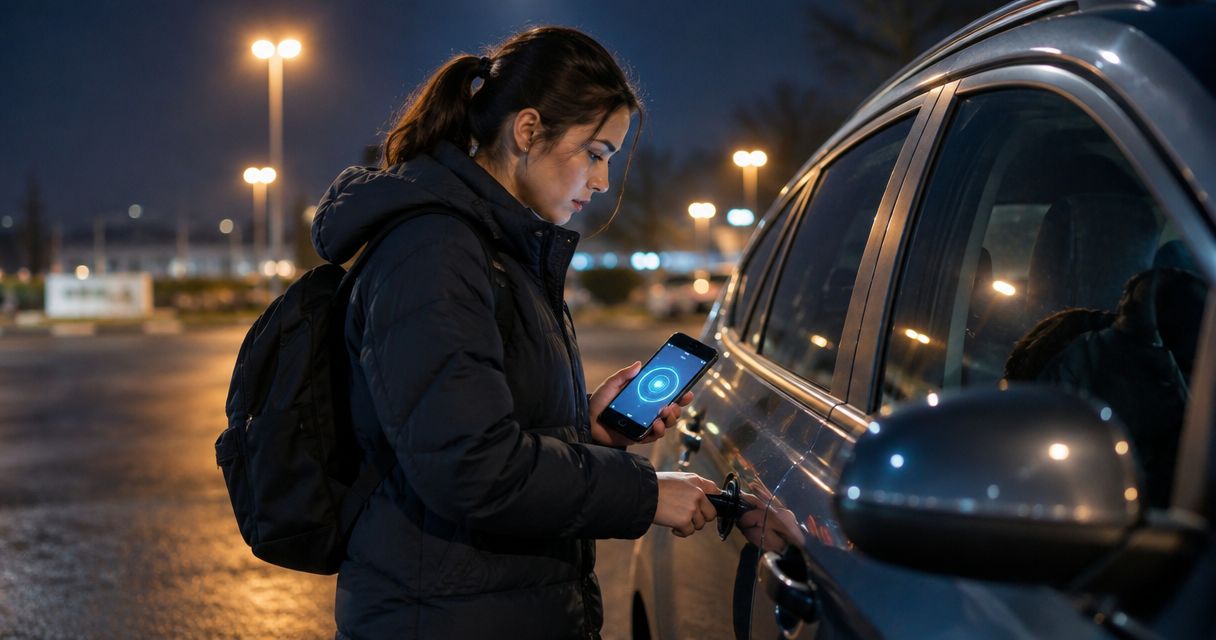
- Vehicle: Give the vehicle make and model, your location, and whether the keys are visible inside.
- Immediate danger: Call 911 if someone is trapped and at risk, or another emergency requires immediate help.
Do not attempt to pick a lock, bypass a door, or force entry. A lockout is stressful enough without adding damage or injury.
Why this matters
Prevention starts with identifying what actually went wrong. Forgetting a working key is different from losing every key, and neither is the same as a lock that will not operate.
That distinction belongs on your 2026 household safety checklist. It tells you whether to request access assistance, contact property management, or arrange separate help for a key or hardware problem.
What makes a useful lockout-prevention habit?
Choose a routine you can follow when you are tired, distracted, or carrying groceries. Complicated systems are easy to abandon.
- Before-door timing: Check your keys while the door is still open.
- Physical confirmation: Feel the key in your hand or pocket rather than assuming it is there.
- Clear ownership: Know who holds each authorized spare.
- Separate access plans: Distinguish your home key, building access, and vehicle key.
- Known limits: Recognize when you need access assistance versus key or lock work.
Causes and prevention at a glance
This is a practical checklist, not a claim about which cause happens most often. Start with the situation that matches your lockout.
| Cause | Best prevention for | Useful habit | Limitation |
|---|---|---|---|
| Keys left inside | Brief trips outside | Confirm keys before closing | Does not help when keys are missing |
| Interrupted exit routine | Busy departures | Pause at the door | Requires attention every time |
| Confused key handoffs | Shared households and vehicles | Confirm who has the key | Depends on clear communication |
| Lost keys | Keys carried between places | Use a consistent carrying spot | Entry help does not replace a lost key |
| Wrong or outdated key | Moves and access changes | Separate current keys | Labels alone do not prove authorization |
| Lock or key malfunction | A key that no longer works normally | Report trouble before a lockout | Access assistance is not lock repair |
1. Keys left inside: best addressed before brief trips outside
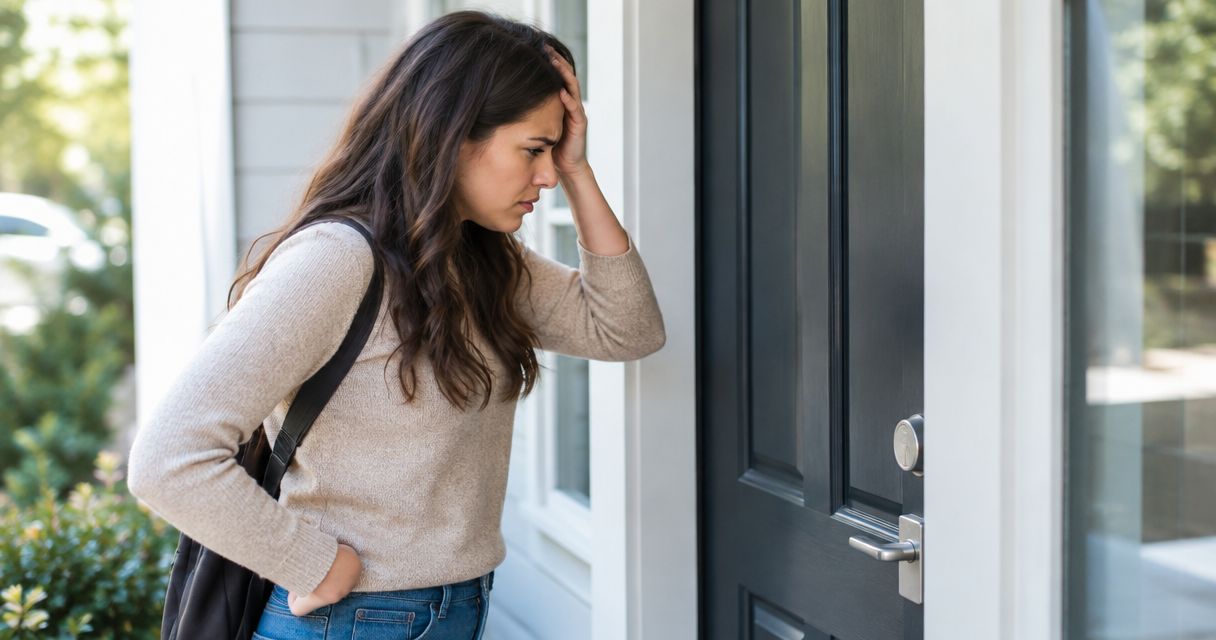
Taking out rubbish, collecting a delivery, or stepping outside to talk can separate you from your keys. If the door locks behind you, a short errand becomes a home lockout.
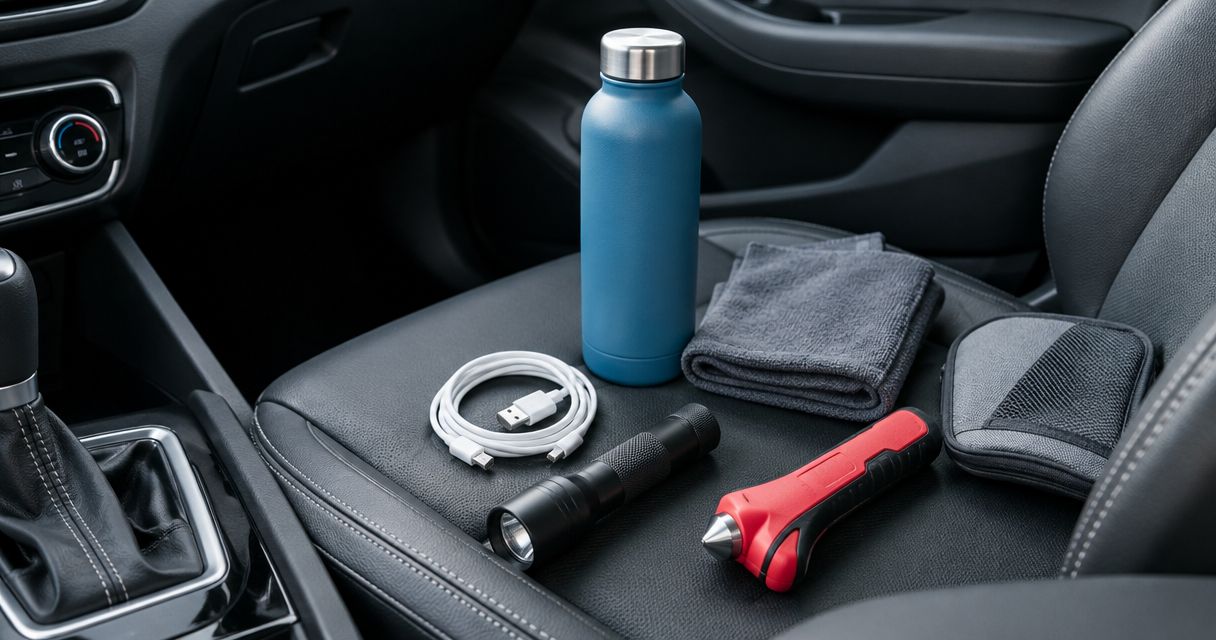
The vehicle equivalent is leaving the key on a seat or in the luggage area while unloading. Keep the key with you rather than with the things you are carrying.
Best for: Anyone stepping away from a home or vehicle for what feels like a moment.
Prevention benefits:
- A physical key check is simple.
- The habit works at home and beside your vehicle.
- It does not depend on remembering how long you will be outside.
Limits:
- Having a key does not confirm the lock works.
- This habit cannot recover a key already locked inside.
Verdict: Skip closing the door until you have confirmed your key is with you.
2. Interrupted routines: best addressed with a doorway pause
A ringing phone, a late departure, or several bags can interrupt your normal sequence. You remember the errand but miss the key check.
Use a short pause before closing your home door or leaving your vehicle. Confirm that you have the keys you need for both the trip and the return home.
Best for: Busy departures, school runs, shopping trips, and changing schedules.
Prevention benefits:
- The same pause works in different places.
- Checking both sets of keys connects the outward and return journeys.
- You can restart the check after an interruption.
Limits:
- A mental checklist still needs your attention.
- Checking only your vehicle key can leave your home access unresolved.
Verdict: Skip relying on memory after an interruption; check again before closing.
3. Confused handoffs: best addressed with a clear agreement
Shared keys create confusion when each person assumes someone else has them. At home, an authorized spare might be with a relative; for a shared vehicle, the usual driver might still have the key.
Confirm the handoff directly. Before separating, agree who has the key and who needs access next.
Best for: Housemates, partners, visiting relatives, and people sharing a vehicle.
Prevention benefits:
- A direct agreement removes assumptions.
- Knowing the spare holder gives you a clear contact.
- The routine helps when plans change during the day.
Limits:
- The spare holder might not be reachable.
- Permission to enter still matters, particularly in a rented property.
Verdict: Skip assuming someone else has handled the key handoff.
4. Lost keys: best addressed with a consistent carrying spot
A key that moves between bags, coat pockets, and loose items becomes harder to locate. Choose a regular carrying spot and check it before leaving a destination.
For both home and vehicle keys, distinguish a misplaced key from one you know is inside. That detail changes the conversation when you request help.
Best for: People who switch bags, jackets, drivers, or daily routines.
Prevention benefits:
- A consistent spot makes checking easier.
- You can notice a missing key before arriving home.
- Clear information helps explain the assistance you need.
Limits:
- A carrying habit cannot guarantee against loss.
- Getting a door open does not provide a replacement key.
Verdict: Skip treating entry assistance as the solution to a missing-key problem. Cupples Locksmith Service handles lockouts; it does not cut, duplicate, or replace keys.
5. Wrong or outdated keys: best addressed after access changes
Moving home, changing household arrangements, or receiving several similar keys can leave you carrying the wrong one. Apartment access can also involve separate building and unit access.
Keep current keys separate from retired or unidentified keys. For a shared vehicle, confirm you have the key for the vehicle you are taking, not another one on the same hook.
Best for: Recent moves, shared key storage, and changes in authorized access.
Prevention benefits:
- Separating keys reduces mix-ups.
- Checking access after an authorized change exposes problems earlier.
- Clear storage helps everyone understand which keys are current.
Limits:
- A label does not establish permission to enter.
- Lockout assistance does not resolve a tenancy or access dispute.
Verdict: Skip leaving an access change unverified until you need to get back inside.
6. Lock or key malfunction: best addressed before access fails
A key that will not turn normally is a different problem from a key left indoors. Do not keep forcing it or assume an unlocking visit will repair the underlying fault.
At a rented home, report the problem to property management. With a vehicle, explain whether the issue involves opening the door or operating the vehicle; those are different requests.
Best for: Anyone noticing a sticking lock, damaged key, or change in normal operation.
Prevention benefits:
- Reporting symptoms gives the responsible person useful information.
- Separating access from repair clarifies what help to request.
- Avoiding force prevents an attempted fix from becoming another problem.
Limits:
- A description alone does not establish the fault.
- Lockout assistance is not a promise of lock repair or key replacement.
Verdict: Skip forcing a reluctant key; explain the symptoms and confirm the service scope.
How these causes are ordered
The list starts with checks you can make before closing a door, then moves to coordination, missing keys, and equipment problems. It is an action order, not a frequency ranking.
For your 2026 prevention routine, choose the habit that addresses your actual problem. A spare-key agreement will not fix a malfunctioning lock, and a working lock will not help if you carry the wrong key.
What to have ready when you call
Cupples Locksmith Service provides vehicle and home lockout assistance across West Tennessee. Whether you are at home or away from it, give the actual location rather than assuming the nearest town is enough.
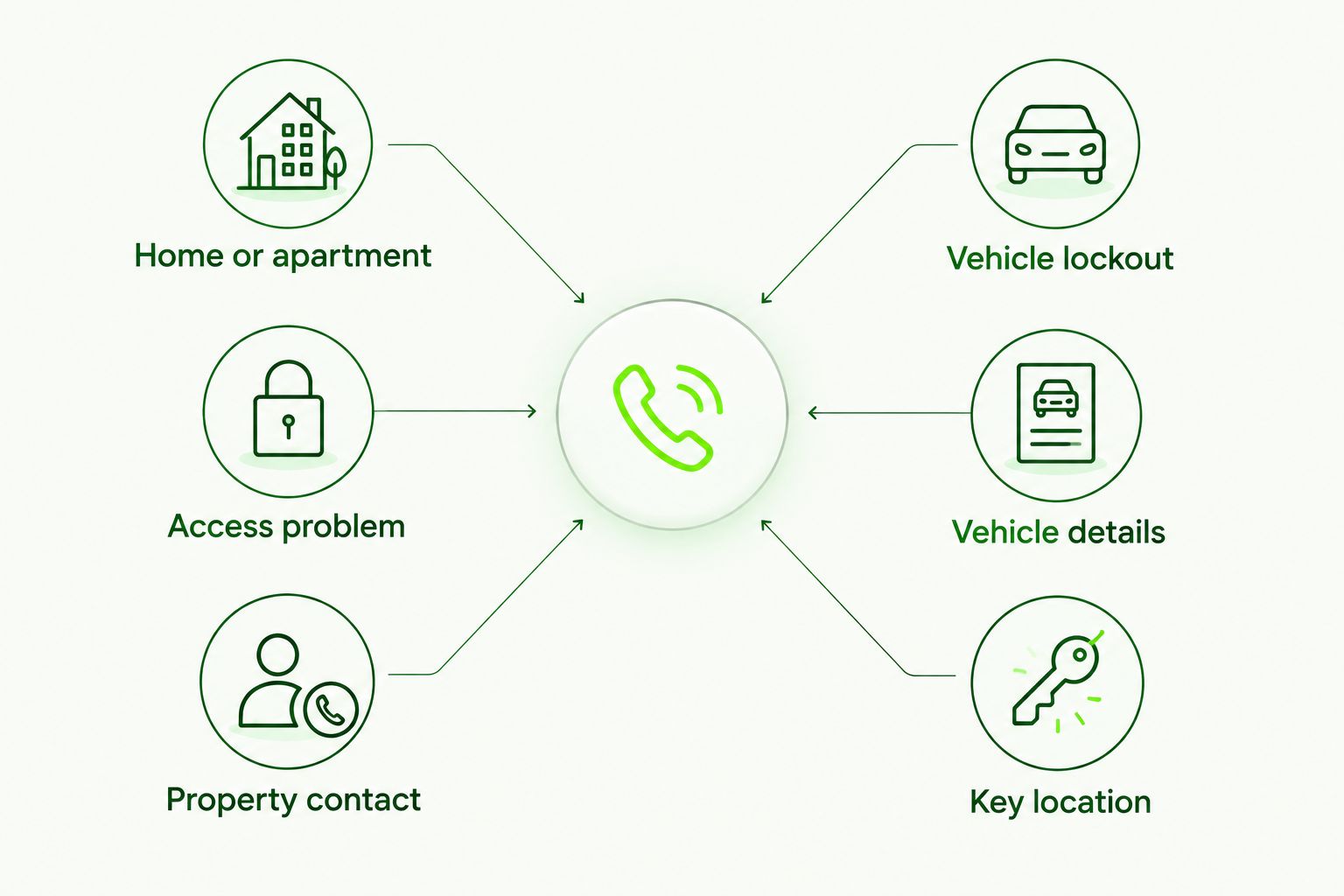
Home or apartment lockout
- Location: Street address, town, and apartment number where relevant.
- Access problem: Keys inside, keys missing, or key not working.
- Property contact: Whether a landlord or manager has been contacted.
- Safety concern: Whether anyone is inside and needs immediate help.
Ask what identification or authorization information to have ready. For an apartment, also explain whether you cannot enter the building, the unit, or both.
Vehicle lockout
- Location: Address or a clear description of where you are parked.
- Vehicle details: Make, model, and anything relevant about access.
- Key location: Visible inside, believed inside, or missing.
- Safety concern: Whether anyone is inside or your waiting place is unsafe.
Ask about the expected arrival time and service scope directly. Do not assume a guaranteed response time or that unlocking includes making a key.
Keep 731-225-9629 in your 2026 emergency contact list somewhere accessible without entering your home or unlocking your vehicle. A number saved only on a phone left inside will not help you make the call.
Call for lockout assistance
Explain your location and whether you need vehicle or home access. No key cutting.
FAQ
What are the causes of house and apartment lockouts?
Causes include keys left inside, interrupted exit routines, confused key handoffs, lost keys, wrong keys, and lock problems. The right next step depends on whether you need access, a replacement key, or repair.
What should I do if I lock myself out of my apartment?
Contact property management about authorized access and explain whether you are locked out of the building or your unit. If you need lockout assistance, describe your situation and ask what authorization information is required.
Can Cupples Locksmith Service help if my house keys are inside?
Cupples Locksmith Service provides home lockout assistance in West Tennessee. Call 731-225-9629, explain that your keys are inside, and give your location.
Can I call the same service for keys locked in my car?
Yes. Vehicle lockout assistance is also within the business's stated scope. Explain the vehicle make and model, where it is parked, and whether the keys are inside.
Does lockout assistance include making a new key?
No. This service does not cut, duplicate, or replace keys. Explain immediately if your keys are missing rather than locked inside.
What should I check about a lockout call in 2026?
Confirm the service scope, expected arrival time, and quote directly when you call. Do not treat access assistance as a promise of key replacement or lock repair.
What if a child or pet is locked inside and in danger?
Call 911 when a child, pet, or another person is trapped and at risk. Tell the dispatcher your location and the immediate danger rather than waiting for an ordinary lockout visit.
One last thing
Getting inside and being able to leave again are different problems. If your key is lost, an open door does not restore your next trip or your next return home.
Make that distinction part of your 2026 lockout plan: arrange the access assistance you need now, then address missing keys or faulty hardware separately.