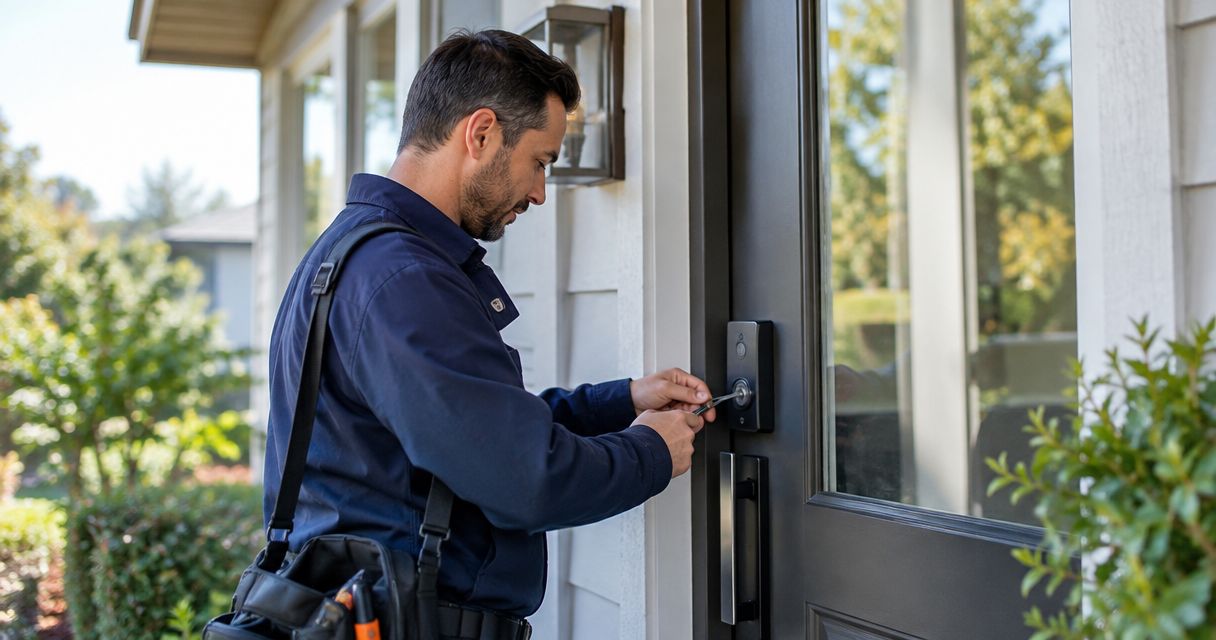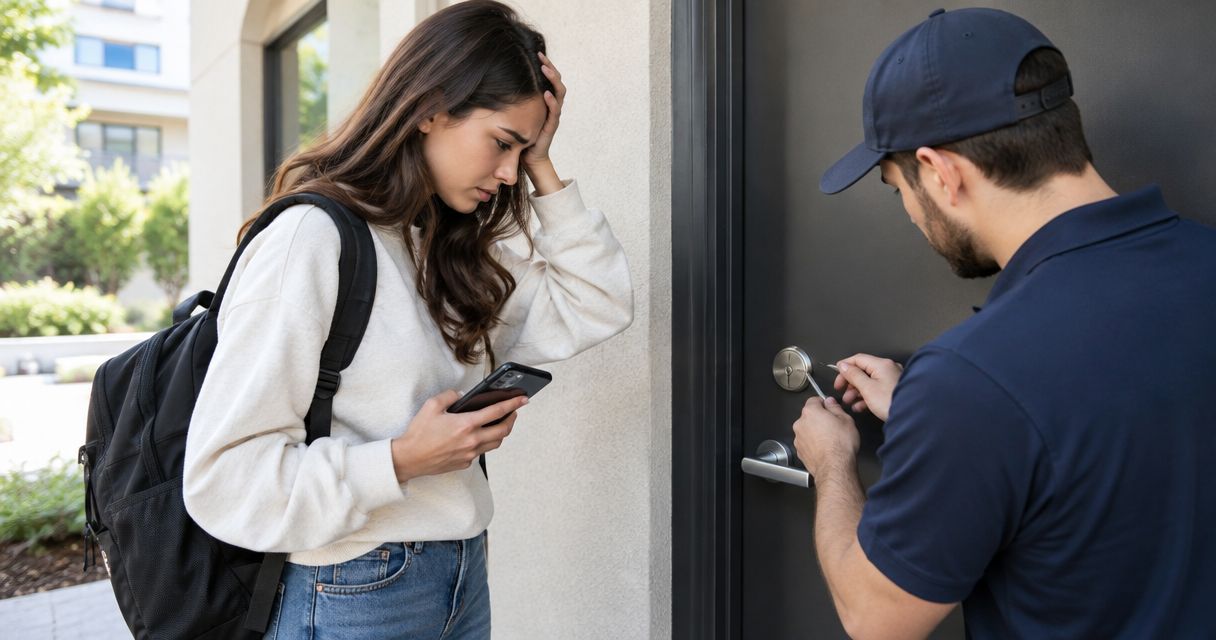
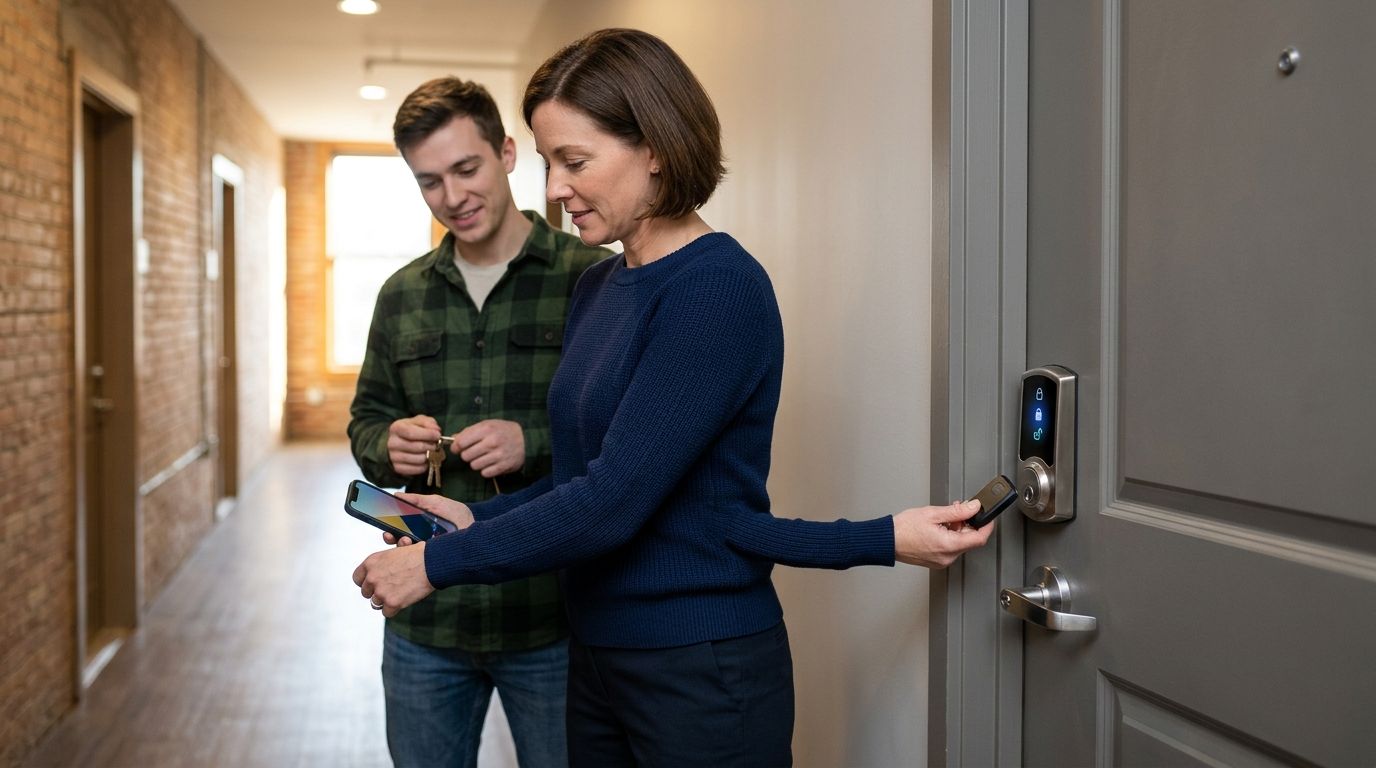
Landlord residential lockout service is help with authorized entry to a locked rental home, with the aim of restoring access without confusing a lockout with a tenancy dispute. For residential lockout service for landlords, confirm who needs entry, whether anyone is in danger, and whether the problem is a locked door or a missing key before arranging help.
- Residential lockout service for landlords starts with safety, the correct rental address, and clear authorization.
- Cupples Locksmith Service handles home and vehicle lockouts in West Tennessee, not key cutting or replacement.
- Choose lockout assistance for an access problem; seek separate help for missing keys, damaged locks, or disputed entry.
- Call 731-225-9629 with the location, lockout details, and the person available to meet the provider.
Why lockout service matters for landlords
A rental lockout involves more than a door. You need to coordinate the resident, the person arranging assistance, and whoever will meet the provider. If those people give different instructions, stop and settle the access question before proceeding.
Cupples Locksmith Service is a fit for West Tennessee landlords who need home lockout assistance, not new keys. Cupples Locksmith Service provides 24/7 emergency home and vehicle lockout assistance for residents and drivers in Jackson and West Tennessee.
Treat the service boundary as the first decision. Opening a home does not replace a lost house key; opening a vehicle does not create a replacement car key. Tell the provider which problem you actually need solved.
For your 2026 rental contact sheet, keep lockout assistance separate from key replacement, lock repair, and tenancy advice. That distinction helps you contact the right service without asking a stranded resident to explain the problem repeatedly.
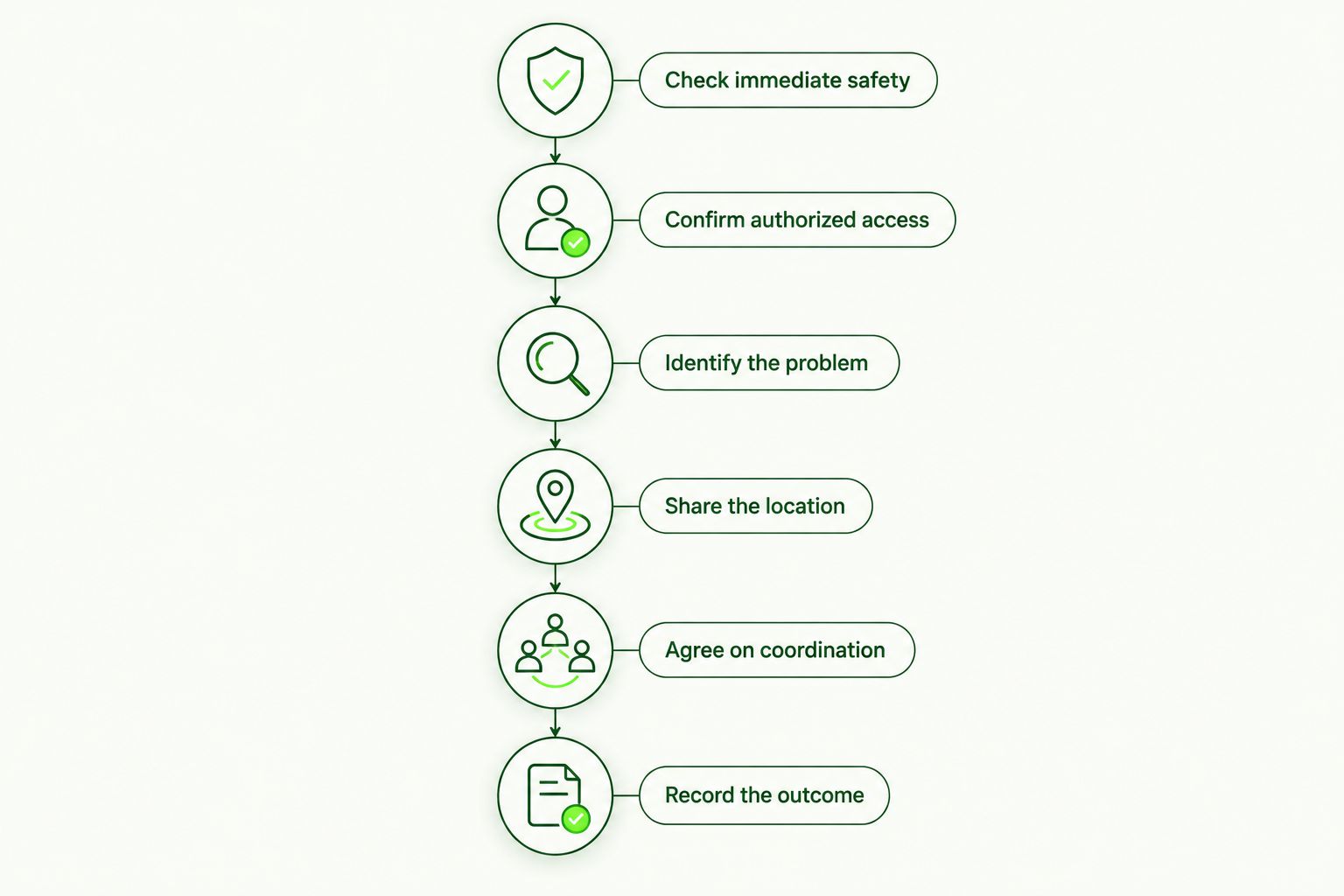
Arrange landlord lockout help in six steps
Check immediate safety
Before discussing entry, ask where the resident is waiting and whether anyone is trapped or in immediate danger. A person outside a locked house needs a different response from a child trapped inside a vehicle. Call 911 for immediate danger rather than treating the situation as an ordinary lockout.
For a home lockout, ask about anyone inside who needs urgent help. For a vehicle lockout, ask whether a person or animal is inside and describe the circumstances to emergency responders when there is danger. Do not wait for routine lockout assistance to resolve a safety emergency.
Keep the first conversation short. You need enough information to distinguish an inconvenient wait from a situation requiring emergency services, not a full history of the tenancy.
- Ask whether anyone is trapped, injured, or in distress.
- Confirm whether the lockout involves a home or vehicle.
- Tell the resident to wait away from traffic and other hazards.
- Call 911 when there is immediate danger.
Confirm authorized access
Establish who is requesting entry and who will be present. A landlord arranging help remotely, a tenant standing outside, and a property manager holding account details are different roles. Make those roles clear when you call.
Do not treat ownership alone as permission to enter an occupied rental under every circumstance. If access is disputed, pause and obtain appropriate legal guidance. A lockout service is not the place to settle possession, eviction, or tenant-consent questions.
Ask the provider what proof and authorization are required before anyone travels. If identification or tenancy documents are inside, explain that immediately rather than promising paperwork the resident cannot produce. The guide to who authorizes apartment lockout service covers this preparation question.
- Identify the resident requesting access.
- Explain your role as landlord or property manager.
- Ask what proof the provider requires.
- Confirm who will meet the provider.
- Stop if there is an unresolved access dispute.
Identify the problem
Ask what happened in plain language: keys left inside, keys missing, a broken key, or a door that will not operate normally. Do not ask the resident to diagnose a lock mechanism. Describe what they observed without turning the call into an attempted repair.
Cupples Locksmith Service handles home and vehicle lockouts; it does not cut, duplicate, or replace keys. If the resident has lost the only key, explain that before arranging assistance. Regaining entry and having a working key afterward are separate needs.
Use the same distinction when a tenant is locked out of a car at the property. State whether the keys are inside the vehicle or missing entirely. Never promise that a home lockout visit automatically includes a vehicle lockout job.
- State where the keys are, if known.
- Mention a broken key or visible lock damage.
- Identify a home door, vehicle cabin, or vehicle trunk.
- Explain whether another working key exists.
- Ask whether the described problem fits the service.
Share the location
Give the complete service address, including the rental unit. A street address without the apartment designation can leave the provider at the wrong door. If the resident is locked out of a vehicle, give the vehicle’s actual location rather than assuming it is at the rental.
Across West Tennessee, tell the provider the town and exact address before asking about attendance. Do not substitute a familiar landmark for the location. Ask whether service can be arranged there and request a current arrival estimate without treating it as a guarantee.
For a home, explain where the resident will wait and whether shared entrances affect access to the unit. For a vehicle, describe its position in the parking area and any safe meeting point. Keep entry codes and other sensitive information out of public messages.
- Give the town, street address, and unit.
- Share the resident’s callback number with permission.
- Describe a safe meeting location.
- Mention gates or shared building entrances.
- Ask for a current arrival estimate.
Agree on coordination
Choose one person to communicate with the provider. The resident can describe the immediate situation while you handle authorization, but everyone should know who is making decisions. Avoid separate calls that result in conflicting addresses or duplicate requests.
Call 731-225-9629 to discuss home or vehicle lockout assistance. State that you are arranging help for a rental resident, describe the actual problem, and ask what needs to happen before service proceeds. Do not assume remote authorization or a particular payment arrangement is accepted.
Before ending the call, repeat the agreed location and contact person. Ask how to report a change if the resident finds a spare key or receives help from someone already authorized. Keep the resident informed so they are not waiting for assistance that has been canceled.
- Name the main contact for the request.
- Confirm who will be present.
- Ask how authorization will be handled.
- Confirm payment arrangements directly.
- Record how to update or cancel the request.
Record the outcome
After access is restored, check whether the resident has a usable key. A successful opening does not resolve a missing-key problem. Record any separate issue without asking the lockout provider to perform work outside the agreed scope.
For a home, distinguish the completed access request from any repair or security concern that still needs attention. For a vehicle, confirm whether the resident recovered the keys or still needs a separate key service. Keep both records factual and brief.
Update your 2026 lockout procedure with the information that proved useful: the correct unit designation, the person authorized to coordinate, and the contact method that reached the resident. Do not store unnecessary copies of sensitive documents in a general maintenance log.
- Record when access was restored.
- Note whether working keys were recovered.
- Separate remaining repairs from the lockout job.
- Confirm the resident has the next contact they need.
- Update the property’s lockout instructions.
These steps follow one order: establish safety and authority before arranging entry, then record what remains unresolved.
Compare your options before requesting entry
Choose the option that matches the problem, not simply the first contact saved under locksmith. This 2026 comparison separates access assistance from key work and emergencies. It does not promise that any particular opening or attendance time can be confirmed without discussing the situation.
| Option | Best for | Practical benefit | Key limitation |
|---|---|---|---|
| An authorized spare-key holder | A home or vehicle lockout when a working spare exists | Restores access without arranging an opening service | Depends on a working spare and an authorized person who can bring it |
| Cupples Locksmith Service home lockout assistance | Authorized access to a locked rental home in West Tennessee | Provides emergency home lockout assistance, including after-hours requests | Does not cut, duplicate, or replace keys; discuss the specific door problem first |
| Cupples Locksmith Service vehicle lockout assistance | A resident or driver locked out of a vehicle in West Tennessee | Provides emergency vehicle lockout assistance | Does not replace missing car keys; describe the vehicle and key location first |
| A separate key or lock service | Missing keys, damaged locks, or work beyond opening | Addresses the unresolved key or hardware problem | Is a different scope from lockout-only assistance |
| Emergency services | Immediate danger involving a trapped person or another urgent threat | Connects the situation to emergency response | Is not the route for an ordinary, non-emergency lockout |
An authorized spare is worth checking first, but only if someone can retrieve it safely and has permission to use it. Do not send residents looking for hidden keys around unfamiliar property or attempting entry themselves.
Common mistakes landlords make
Assuming ownership settles authorization
An ownership claim does not explain the resident’s consent or the circumstances of entry. Tell the provider who occupies the home, who requested help, and whether there is any dispute. Keep contested possession matters separate from a lockout request.
Treating opening and key replacement as one job
A resident can regain entry and still have no usable key. Ask whether keys are locked inside or lost before choosing a service. Apply the same question to a rental home and to a vehicle parked outside it.
Giving the rental address for every request
A resident’s vehicle might be somewhere else, and a multi-unit property needs more than a street number. Verify the location during each call. Do not rely on an address copied from an earlier maintenance request.
Leaving the resident out of the conversation
The person outside knows what happened and where they can safely wait. Confirm their contact details and explain who is arranging help. If you coordinate remotely, do not promise what the provider will accept on your behalf.
FAQ
Who should a landlord call when a tenant is locked out?
Call a home lockout provider after confirming safety, the rental address, and who is requesting authorized entry. For West Tennessee home lockout assistance, call 731-225-9629 and explain that you are coordinating for a tenant.
Can a landlord arrange lockout help without being at the property?
Ask the provider whether remote coordination is accepted before arranging service. Explain who will meet the provider and ask what authorization and proof are required.
Does Cupples Locksmith Service make new keys for rental homes?
No. Cupples Locksmith Service provides home and vehicle lockout assistance but does not cut, duplicate, or replace keys.
What should I do if the tenant's identification is locked inside?
Tell the provider before service is arranged and ask what alternative proof is acceptable. Do not assume a particular document or a landlord's phone call will satisfy the provider's requirements.
What if the tenant lost the key rather than leaving it inside?
Explain that the key is missing before requesting help. Opening the home or vehicle does not create a replacement key, so a separate key service is needed for that work.
Can the same business help with a home lockout and a vehicle lockout?
Cupples Locksmith Service provides both home and vehicle lockout assistance in West Tennessee. Describe each request separately, including the location and whether the keys are inside or missing.
When should a landlord call 911 instead of arranging a lockout service?
Call 911 when someone is in immediate danger. Tell the dispatcher whether the situation involves a home or vehicle and follow the emergency instructions rather than waiting for routine lockout help.
One last thing
The most useful question is: will the resident have a working key after entry? Ask it before arranging help, not after the door opens. It separates a straightforward lockout from an unresolved key problem.
Keep that question on your 2026 rental emergency contact sheet alongside the service address, authorization contact, and resident callback number. For home or vehicle lockout assistance in West Tennessee, call 731-225-9629 and describe the situation.