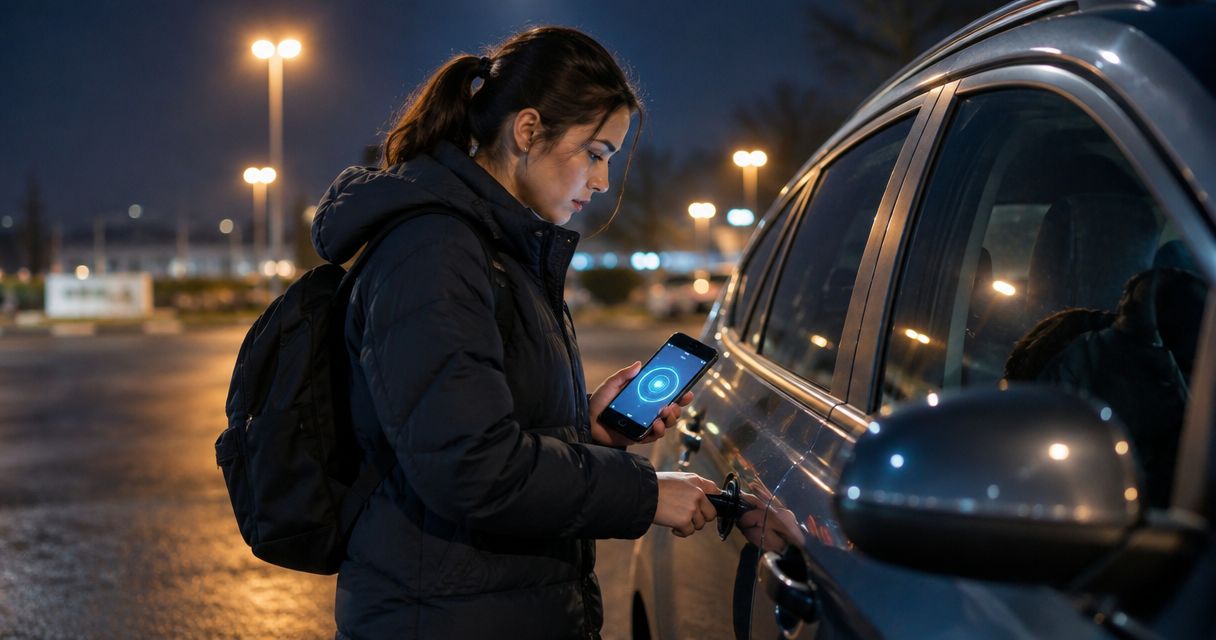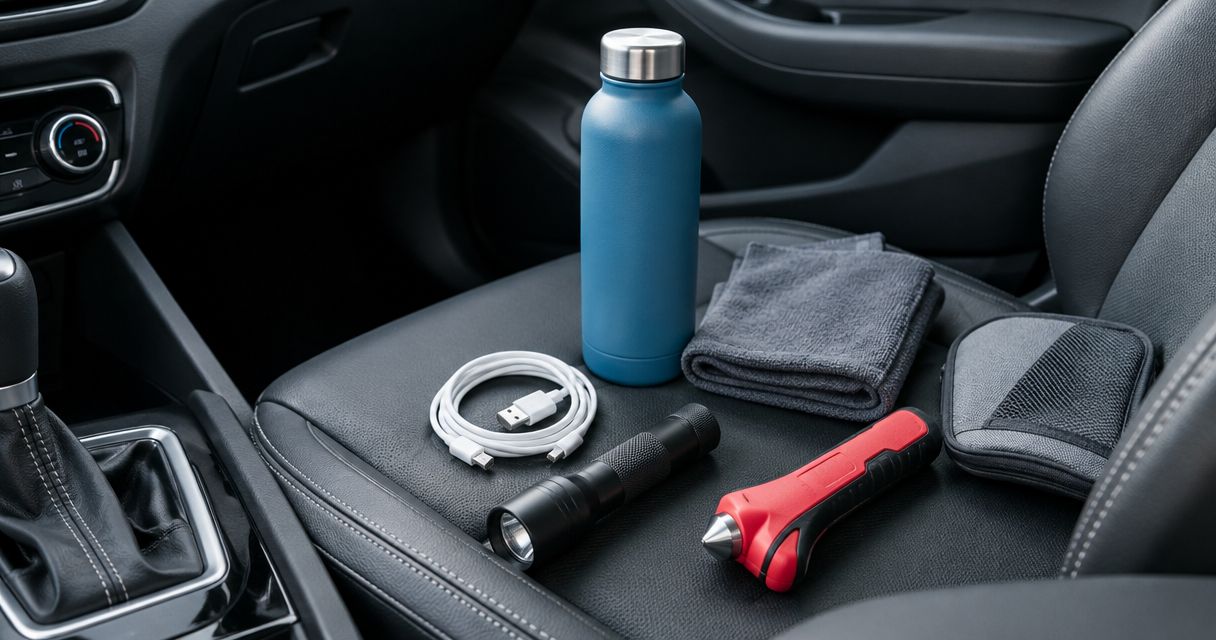
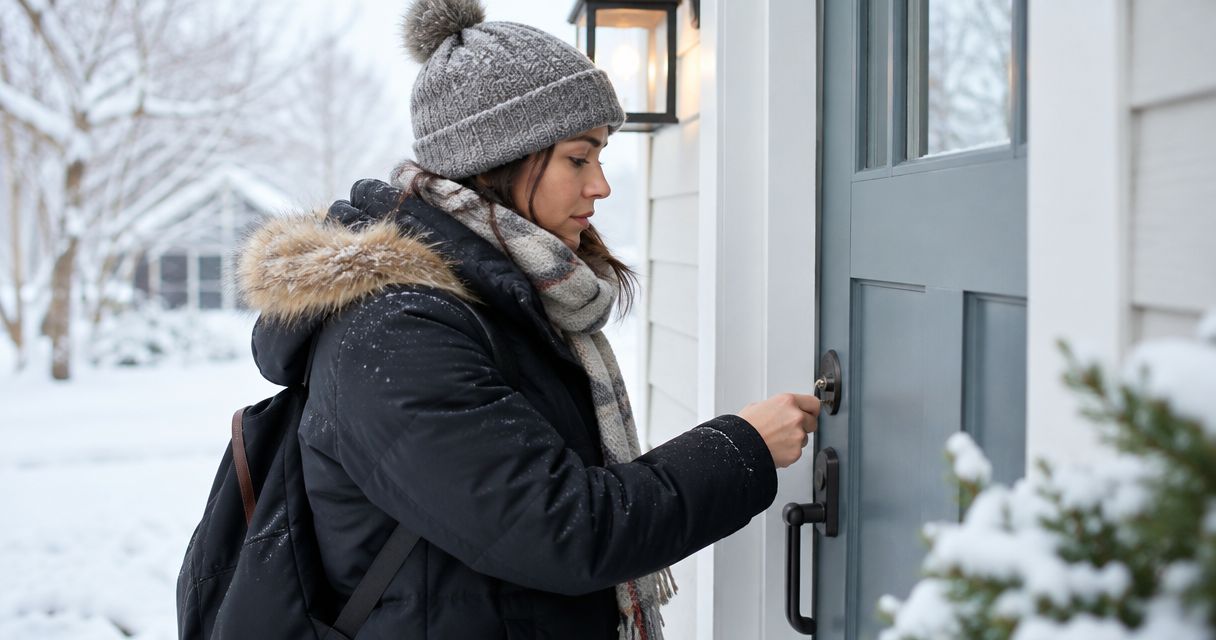
Best overall: a keys-in-hand check before you close the door. Best backup: an existing spare held by someone you trust. Best for shared households: a clear key handoff. If you’re working out how to prevent a home lockout in winter, start with these habits and carry them over to your vehicle.
- For how to prevent a home lockout in winter, a keys-in-hand check is the best starting habit.
- Keep an existing spare with a trusted person rather than hiding it outside.
- Check home keys and vehicle keys separately before closing either door.
- Cupples Locksmith Service provides home and vehicle lockout assistance, not key cutting or replacement.
Why this matters
Cold weather makes a forgotten key more than an inconvenience. Your prevention plan needs to cover both getting inside and having somewhere safe to wait if access fails.
For winter 2026, build your plan around ordinary departures: leaving for work, unloading groceries, taking out rubbish, or moving between your home and vehicle. These are useful moments to pause before a door closes.
Cupples Locksmith Service provides 24/7 emergency home and vehicle lockout assistance in Jackson and West Tennessee. The service gets you back in; it does not cut, duplicate, or replace keys.
What makes the best winter lockout prevention plan
Choose habits you can repeat while wearing a coat, carrying bags, or managing a busy household.
- Checks before closure: You confirm access before the door shuts, not afterward.
- Independent backup: Your spare does not depend on entering the locked home or vehicle.
- Clear responsibility: Everyone knows who has the working key and who needs it next.
- Safe waiting: You know where to shelter if you cannot get inside.
- Correct service: You distinguish a lockout from a missing-key or lock-repair problem.
A good 2026 winter checklist should be short enough to remember without opening an app. Start with the first method below, then add the backup that fits your household.
Winter lockout prevention at a glance
| Method | Best for | Main benefit | Key limitation |
|---|---|---|---|
| Keys-in-hand check | Everyday departures | Confirms the key is with you before closure | Depends on repeating the habit |
| Trusted-person spare | A backup when the main key is inaccessible | Keeps an existing spare outside the locked property | Depends on the person being reachable |
| Household key handoff | Shared homes and vehicles | Makes responsibility explicit | Requires agreement between users |
| Home-to-vehicle check | Errands, commuting, and unloading | Treats home access and vehicle access separately | Does not replace a spare-key plan |
| Early attention to access problems | Doors or keys becoming difficult to use | Keeps a developing problem on your task list | Requires the appropriate repair or key service |
1. Keys-in-hand check: best for everyday departures
Hold your home key before closing the exterior door. Knowing where the key usually lives is not the same as confirming that you have it now.
Choose one consistent place for your keys when you are indoors. Before leaving, check that they have moved from that place into your hand or a secure pocket. Repeat the check before closing your vehicle, especially after changing coats or moving keys into a bag.
This is the default recommendation for 2026 because it does not require you to change your lock or buy a device. The habit belongs at the door, where it can stop the mistake.
Keys-in-hand check pros:
- Fits both home and vehicle departures.
- Does not depend on a phone connection.
- Gives you a clear action before the door closes.
Keys-in-hand check cons:
- Interruptions can break the routine.
- It does not solve a lost-key or damaged-key problem.
Best for: Anyone who sometimes closes a door while distracted or carrying things.
Verdict: Adopt the keys-in-hand check as your first prevention habit.
2. Trusted-person spare: best for independent backup access
An existing spare helps only when you can reach it without opening the locked home or vehicle. Ask a trusted person whether they can hold it and how you should contact them.
Agree on the details before winter weather arrives. Someone who is comfortable keeping a spare is not necessarily able to answer every call or bring it to you.
Keep home and vehicle arrangements separate. If you already have spare keys for both, make sure the person understands which key serves which purpose. Do not make the vehicle your only storage place for a home spare if a vehicle lockout would also cut off that backup.
Trusted-person spare pros:
- Provides another route to an existing key.
- Avoids relying on an outdoor hiding place.
- Can support either home or vehicle access when the appropriate spare exists.
Trusted-person spare cons:
- Depends on another person being reachable.
- A spare left inside the locked property cannot help from outside.
Best for: Households with an existing spare and a trusted contact.
Verdict: Adopt a trusted-person spare as a backup, not your only plan.
3. Household key handoff: best for shared homes and vehicles
A key handoff needs an acknowledgment. Before someone leaves with a shared key, confirm who has it and whether anyone else still needs access.
Use a plain statement rather than an assumption: tell the other person where the key is and get confirmation. This matters when one person leaves early, another returns later, or household members use different vehicles.
For your 2026 household plan, agree on what happens when the schedule changes. A spare arrangement cannot help if everyone believes someone else is carrying the key.
Household key handoff pros:
- Clarifies who has the key right now.
- Supports shared home and vehicle routines.
- Makes changed plans easier to communicate.
Household key handoff cons:
- Requires everyone involved to follow the agreement.
- Does not provide independent access when there is only one working key.
Best for: Partners, families, housemates, and people sharing a vehicle.
Verdict: Adopt an explicit handoff whenever responsibility for a key changes.
4. Home-to-vehicle check: best for errands and unloading
Treat your home and vehicle as separate access checks. Having your vehicle key does not confirm that you have your home key, and the reverse is also true.
Before stepping outside, confirm home access. Before closing the vehicle, confirm vehicle access. When unloading, keep the keys with you rather than setting them down among bags or belongings.
Plan the return trip too. After changing coats, handing someone a bag, or switching drivers, check where both sets of keys are before anyone closes a door. The useful habit is a pause at each transition, not one check at the start of the day.
Home-to-vehicle check pros:
- Gives home and vehicle access equal attention.
- Fits commuting, shopping, and household errands.
- Makes key location part of the transition between spaces.
Home-to-vehicle check cons:
- Requires more than one check during an outing.
- Does not resolve a malfunctioning lock or key.
Best for: Drivers moving frequently between a home and a vehicle.
Verdict: Adopt separate checks before closing your home and vehicle doors.
5. Early attention to access problems: best for unreliable entry
A key that becomes difficult to use deserves attention before you depend on it during cold weather. Do not make forcing a key or struggling with a door part of your departure routine.
Describe the problem to the appropriate service provider and ask what kind of help you need. Difficulty operating a lock is different from leaving a working key inside.
The distinction applies to vehicles as well. Being locked out with keys inside is not the same problem as needing a replacement key. Cupples Locksmith Service handles home and vehicle lockout assistance; key cutting, duplication, and replacement are outside its scope.
Early attention pros:
- Separates an access problem from a forgotten-key problem.
- Helps you ask for the correct service.
- Gives you a reason to arrange a backup before relying on difficult entry.
Early attention cons:
- Requires follow-through beyond a daily checklist.
- A lockout visit is not a substitute for needed repair or replacement-key work.
Best for: Anyone noticing a change in how a door, lock, or key works.
Verdict: Address unreliable entry early; do not treat it as a normal winter routine.
How these methods are ranked
The ranking puts the simplest repeatable check first, followed by independent backup and shared responsibility. The final methods cover transitions and access problems that a spare alone does not resolve.
For 2026 winter preparation, choose a daily habit and a separate backup. None of these methods guarantees that you will never be locked out.
Which prevention method should you choose?
Start with the keys-in-hand check, then arrange access to an existing spare. Add a clear handoff if you share keys and separate checks if you move between a home and vehicle.
You do not need a complicated system. You need a routine you will follow when you are distracted, carrying something, or ready to get out of the cold.
If you are already locked out
Stop trying to solve prevention after the door has closed. Move to a safe place and work out whether the problem is inaccessible keys, missing keys, or a lock that will not operate.
If someone is in immediate danger, call 911. For a lockout without immediate danger, prepare the details below before requesting assistance.
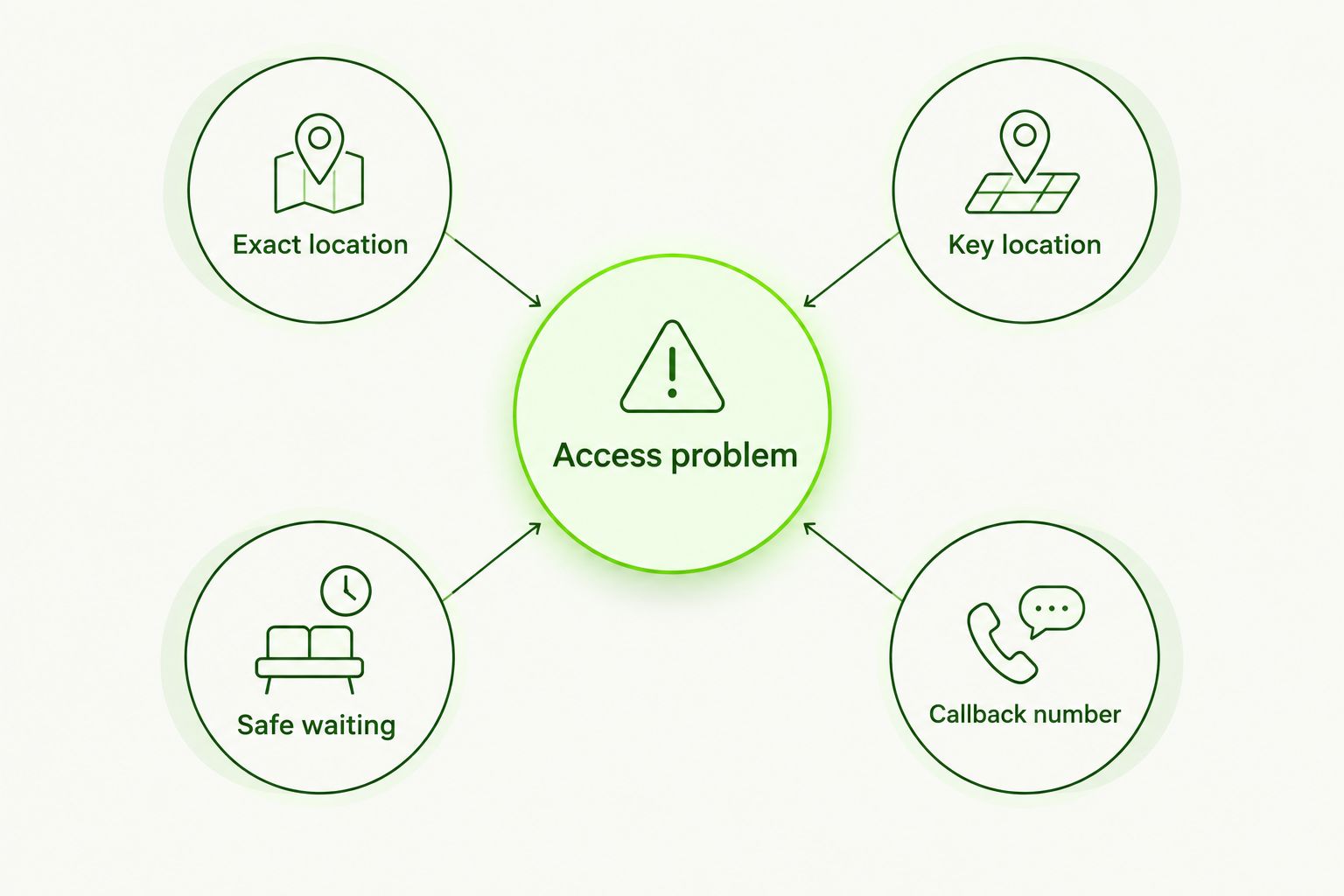
Your call-preparation checklist
- Exact location: Give the address or a clear description of where the vehicle is parked.
- Access problem: Say whether you need home or vehicle lockout assistance.
- Key location: Explain whether the keys are inside, lost, or elsewhere.
- Safe waiting: Tell the provider where you can wait safely.
- Callback number: Give a number where you can be reached.
For a home lockout, explain whether you rent and whether anyone else has an existing key. For a vehicle lockout, identify the vehicle and explain where the keys are. The guide to what to tell a home lockout service when you call helps you organize the conversation.
Call 731-225-9629 for Cupples Locksmith Service home or vehicle lockout assistance in West Tennessee. Ask about service to your exact location and the expected arrival time rather than assuming either.
Call for lockout assistance
Home or vehicle lockout in West Tennessee? Explain your location and where the keys are.
FAQ
What's the best way to prevent a home lockout in winter?
Check that your home key is in your hand before closing the exterior door. Add an existing spare held by a trusted person so your backup does not depend on entering the locked home.
Should I keep my spare house key in my vehicle?
Do not make your vehicle the only place you keep a backup home key. A vehicle lockout would leave that spare inaccessible too.
What should I do if I'm locked out in cold weather?
Move to a safe place and request the appropriate help. Call 911 if someone is in immediate danger; otherwise, prepare your location, key details, and callback number for the lockout provider.
Can Cupples Locksmith Service help with home and vehicle lockouts?
Cupples Locksmith Service provides 24/7 emergency home and vehicle lockout assistance in Jackson and West Tennessee. Call 731-225-9629 and give your exact location and access problem.
Does Cupples Locksmith Service make replacement keys?
Cupples Locksmith Service does not cut, duplicate, or replace keys. Explain whether your keys are inside or missing so the request is correctly understood.
What should renters do before arranging home lockout assistance?
Contact your landlord, property manager, or designated after-hours contact and ask about the property's access procedure. Explain any instructions you receive when speaking with a lockout provider.
One last thing
A backup key is not a backup if it is behind the same locked door. Before your next departure, check whether your spare arrangement still works when both your home and vehicle are inaccessible.